As Wildfire Agencies Drown in Data, Lives Depend On Processing It With Precision
Everything needed to see a wildfire's next move is already streaming in from sensors, aircraft, and crews. The failure is that no one can pull it together fast enough to matter.
Make The Intelligence Record one of your go-to sources on Google


First responders and the agencies behind them have all of this intelligence, but none of it's intelligent.
An interagency Helitack crew was running initial attack on the Knowles Fire in the red-rock country along the Colorado-Utah border when fifty-mile-an-hour winds drove a second fire across their escape. A helicopter was already up to pull them off the ridge, but the smoke had closed visibility to nearly zero and prevented its landing. Five firefighters were caught in the burnover and deployed shelters. Three passed away on the mountain, and a fourth died of injuries weeks later. It was the deadliest entrapment of its kind in the country in more than a decade.
The signals to see it coming were all there. They were just scattered across too many systems for anyone to read them in time.
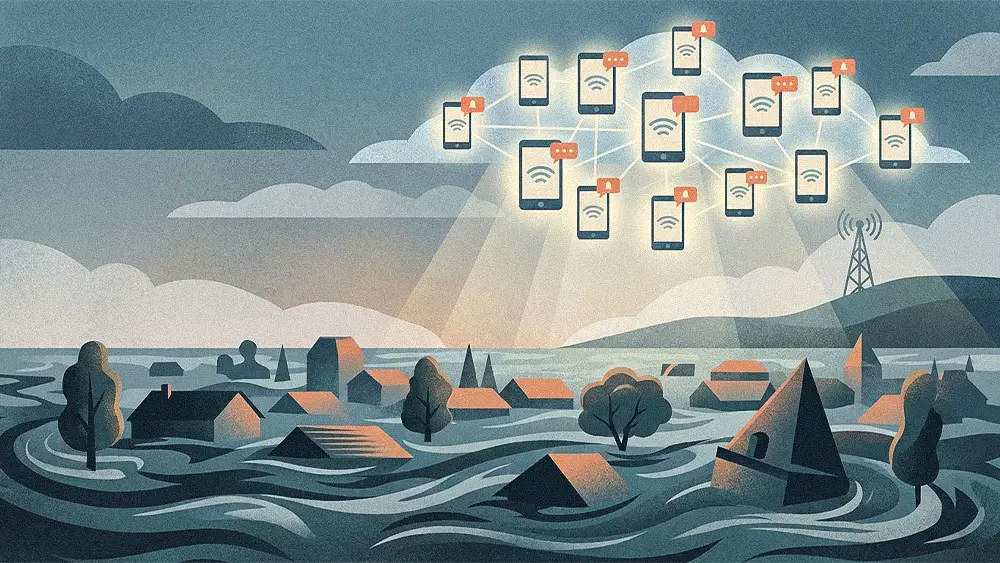
A modern fire generates an enormous amount of data: sensors, aircraft, weather models, crew trackers, radios. On a large incident the volume coming in is overwhelming. The shortage was never information. "First responders and the agencies behind them have all of this intelligence," says Ankur Laroia, a presidential appointee to the White House Office of Science and Technology Policy who advises Polaris I/O on public sector work. "But none of it's intelligent."
What's known and what's usable aren't the same thing in a fire. The distance between them is where crews find themselves in danger, and the tools to close it have never quite arrived in time.
Documented for decades
More than a decade before the Knowles fire, nineteen members of the Granite Mountain Hotshots were killed near Yarnell, Arizona, when the fire turned and ran them into a box canyon. The official investigation found no negligence. The crew was qualified, followed training, and everyone involved made reasonable decisions. And still, for roughly half an hour before the end, no one knew where they were. An air tanker circled overhead waiting on a location that never came.
It would be easy to file Yarnell away as a 2010s problem, solved since by better radios and newer tools. But the point of failure at Yarnell wasn't equipment. It was shared awareness, the ability of everyone on the fire to see the same thing at the same moment, and no amount of new hardware has closed that gap.
The problem persists, and not for lack of instruction. A 2019 federal law directed the Forest Service and the Interior Department to build a system that could locate fire resources and place them on real-time maps. Six years on, the Government Accountability Office found the agency still can't track most of its firefighters on foot during a fire. It can follow its aircraft, and its vehicles where there's cell coverage, but not the people walking the line. Two decades earlier the same office had already flagged the root problem: different agencies, different frequencies, incompatible equipment, and technology alone unable to close it.
Everyone responds, nothing connects
To understand why that awareness is so hard to build, picture who shows up to a fire of consequence. "You have county officials. You have city firefighters. You have state firefighters, and you have federal firefighters, all coming to help," says Laroia, who holds a Top Secret/SCI clearance. "They all have their own equipment. They all have their own comms equipment. They have their own processes and methodologies, and they're all different."
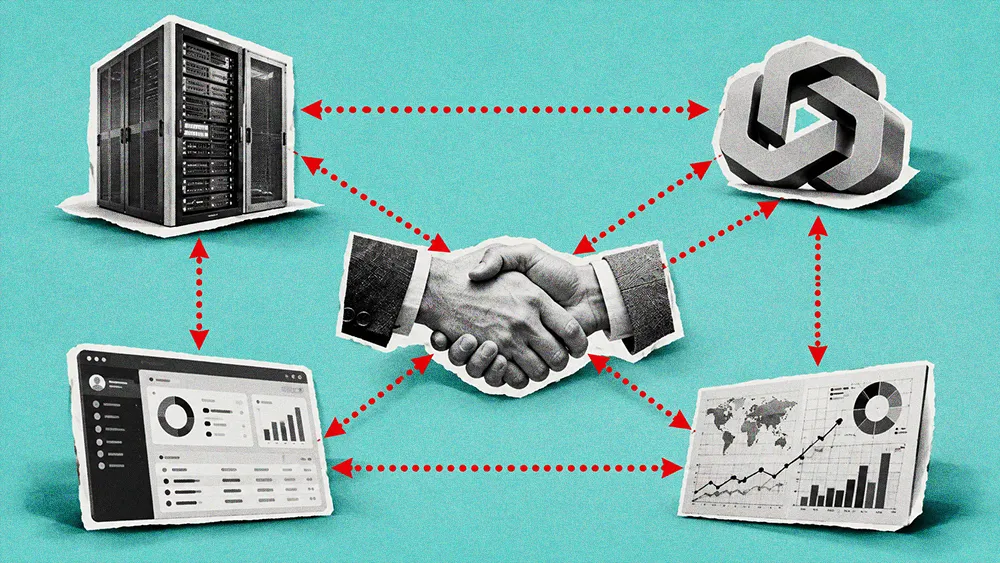
A dozen organizations can work the same ground, none fully able to see the others. On top sits a commander, usually one person, responsible for turning that into decisions. "All of it's coming to the commander as the tip of the spear, to make decisions," he continues. "The number of variables they're dealing with isn't in the thousands. It's in the millions."
It stops being abstract the moment the wind changes. "Each agency's got its own dispatch program, its own beaconing program. So how do I know where all my firefighters are?" says Laroia. The answer, on a fast-moving fire, can take longer to assemble than the fire takes to move. "They're all on different systems, and none of them talk to each other. That's fine until the wind changes. Then you've got people on the wrong side of a fire, and no one knows it until it's too late."
Where people and hardware give out
Right now, Laroia says, the job of fusing all of that falls to people. "You've got people staring at banks of screens, listening to the radio, trying to hold the whole fire in their head. They're the human aggregator, and that doesn't scale. People get tired. Things get lost in translation. The system doesn't get tired, and it doesn't lose things."
It isn't a knock on the people. It's just a limit of what a person can do. "You're monitoring seven or eight screens at once, and your brain just can't do it. You can time-slice, but you can't genuinely multitask. Nobody can."
And even the hardware doesn't travel. Wildland crews move constantly, sent across the country to fires far from home, and what works in one state can be useless in the next. Radios run on different systems, dispatch runs on different software, and a crew that shows up to help can find it can't reach the people it came to help. Laroia describes a friend who leads a crew in New Mexico, sent to fight fires in Oregon. "The training that crew has is nowhere close to fighting fires in Oregon. And their radios are so old they can't even get onto the network out there. That happens all the time."
Tapping in, not taking over
Picture the Knowles incident with one thing changed. The wind shift doesn't wait for someone to notice it, radio it in, and hope the right people hear. It registers the moment it happens, checked against the live position of every crew on the ground. The commander isn't waiting on a location. It's already on the screen, along with the fact that a crew is now on the wrong side of the fire.
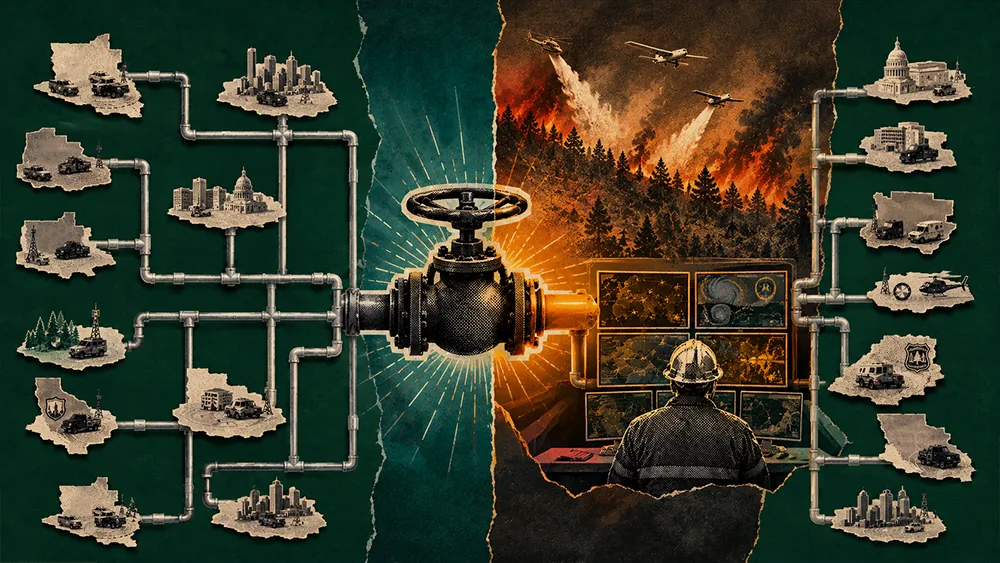
Most of those feeds already exist. They just don't talk to each other. The instinct, when data is scattered across a dozen systems, is to pull all of it into one warehouse everybody feeds. Laroia says that's the wrong move, and it's where Polaris parts ways with most of what gets sold to government. "I don't want all your data. Keep it where it is, under your control. Let me reach in, process it, and give you back something you can actually use."
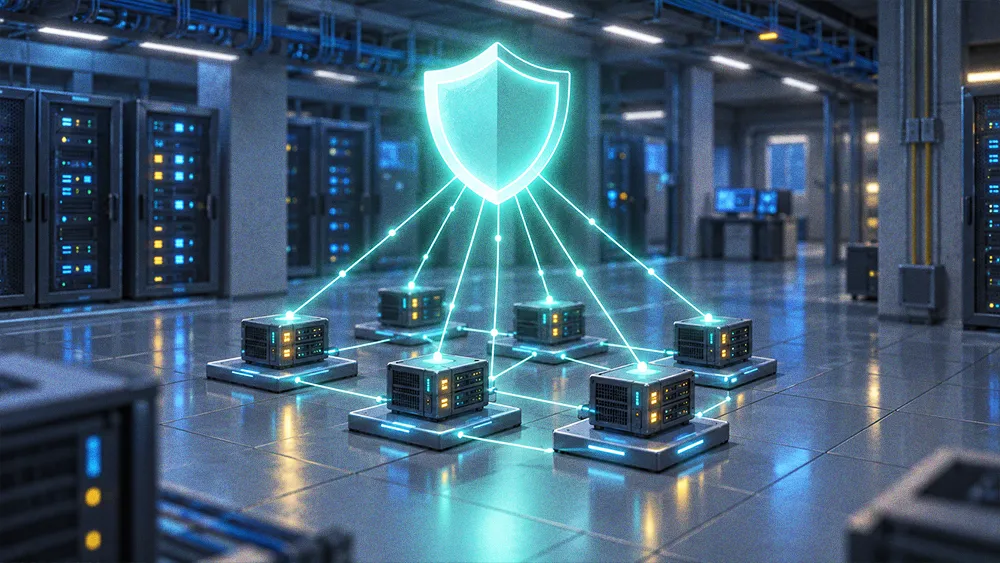
The model is closer to tapping in than taking over. The data stays inside each agency's system, under each agency's control. Polaris reaches into those feeds in real time, fuses them into a single picture, and hands the commander options: what's changing, what's now at risk, what to do about it. The person still decides. The system buys the time to decide well.
The link exists only while it's needed. It runs on demand and then stands down. "You have the plumbing, but the water doesn't flow until you need it," says Laroia. "When the next fire happens, everything's already connected. You push play, and fifteen minutes later the whole system is up. You fight the fire, you pull your lessons out, and you shut it down."
The connectivity and the decision-making are built as separate pieces, so an agency can use one without the other and size each to the situation. That's what lets the same system fit a fire, a flood, and a blackout without being rebuilt each time. "We don't just aggregate and store the data. We're doing it in real time. And that's what makes us faster than everybody else."
Funded only in crisis
The technology question sits inside a money question, and the money almost always shows up too late. Agencies put forward enormous sums once a fire is burning, mobilizing crews, aircraft, and equipment at a cost nobody blinks at in a crisis. What's harder is spending a fraction of that beforehand, on the systems that would make the response work when it counts. "We're really good at throwing people and money at it in a crisis," Laroia explains. "We won't spend on prevention, but the moment it hits the fan, we just throw money at it."
The same argument is being made well beyond any one vendor. In June 2026 a Canadian Senate committee, citing fractured jurisdictions and coordination gaps across three consecutive record fire seasons, heard testimony urging a shift of funding from suppression toward forward planning. The logic is the same one every fire chief already knows: the dollar spent before a fire does more than the dollar spent during one.
Executing the mission
The pitch, in the end, isn't really about technology at all. "What we're doing is helping you execute your mission," Laroia says. And on a fire, the mission is the crew that gets to go home.
The structural problem doesn't dissolve with a reorganization. The U.S. Wildland Fire Service was created in 2026 to consolidate and streamline federal firefighting, and the Knowles fire was still, in the government's own words, an interagency response. State and local crews show up regardless of how the federal boxes are drawn. You can merge an org chart and still not have interoperability on the fireline.
Which returns to the thing that's hardest to accept about the Knowles tragedy: the data to sharpen the picture was already in the air. The people were qualified and doing their jobs. What failed was the step in between, the one that turns a thousand separate feeds into a single picture fast enough to matter. That step has never been the firefighters' to fix.