Most Companies Deploy CRM Like Software. Perhaps They Should Be Running It As A Living Ecosystem.
Dipa Tapadar, Enterprise Digital and Data Transformation Leader at Cognizant, on what regulated industries keep getting wrong about CRM and why AI is about to expose it.

Make The Intelligence Record one of your go-to sources on Google


A software project has a start date, an end date, a target. But CRM is a strategy. It has no end date. If you treat it as a software project, it's never going to work, because it's the think tank of the organization.

Most enterprise CRM implementations still get planned like software projects. A team scopes the build, sets a go-live date, and moves on to the next thing on the roadmap. In heavily regulated industries like life sciences and insurance, that approach keeps producing the same result: the system launches, the dashboards exist, and the data inside them drifts further from the decisions the business actually needs to make. CRM either lives at the strategy layer or it decays. There is no middle state.
Dipa Tapadar is an Enterprise Digital and Data Transformation Leader at Cognizant, where she's spent over fifteen years leading CRM and data modernization programs across life sciences, pharma, healthcare, and insurance. Her work sits at the intersection that makes this problem so persistent: regulated data, legacy systems, and organizations that need their CRM to do far more than it was originally built for. She's led global Salesforce and Veeva platform transformations from the validation layer up through enterprise portfolio strategy, and her read on what separates the organizations that get value from the ones that don't is structural, not technical.
"A software project has a start date, an end date, a target. But CRM is a strategy. It has no end date. If you treat it as a software project, it's never going to work, because it's the think tank of the organization," says Tapadar.
When Marketing Takes Over
The first distinction is organizational. "The elite orgs put CRM under marketing leadership. Not under IT." That single move changes the accountability model. Marketing leadership ties CRM to revenue targets and ROI, where IT leadership ties it to uptime and ticket resolution. When marketing owns the system, data quality becomes a continuous discipline rather than a cleanup project someone runs before a launch. In regulated industries, where legacy systems persist and HCP lists still live in Excel spreadsheets never synced to a modern platform, that discipline has to be permanent. "It's not a one-time cleansing," Tapadar says. "It's a continuous effort. How you are treating the data, how you are consuming the data, how you are storing it."
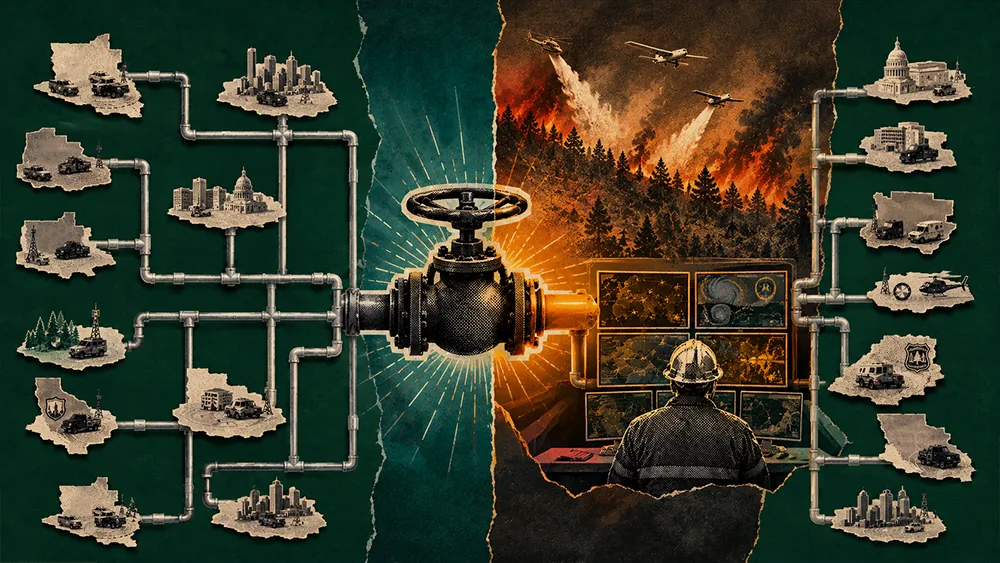
The architecture underneath has changed to match. What used to be flat, unpipelined storage has given way to data warehousing, clustering, indexing, and role-based access designed around distinct audiences. Researchers and PhD-level analysts pull from data lakes while reps and compliance teams work with structured warehouse data. The centralized database remains the core, but the access layer is modular and governed by role, which is what makes the 360-degree customer view something a team can actually operate on rather than just talk about.
Three Entities, One Doctor
Tapadar's example of why this matters starts with a single HCP. Take a doctor who sits on a rep's target list. That same doctor also opened a marketing email and attended a medical event. In the old architecture, those interactions were recorded as three separate entities across three fragmented systems. "Systems don't talk between each other," she explains. The rep's touchpoints were scattered across records that didn't know they belonged to the same person, which meant the work never added up in one place. Compensation disputes followed. The system was generating activity data, but nobody could see it as a single relationship.
That problem has started to resolve through API integration and global templates that standardize HCP and HCO structures, product hierarchies, and call activity schemas before anyone writes a line of configuration. But standardization has limits. "The global template one of the orgs is using in Japan is not going to work here in the U.S.," Tapadar says. "The compliance standards are different." The specialty attributes differ. The fields that drive dynamic targeting differ. Country-specific adaptation remains strategic, manual work, and it fails when leadership treats it as a one-time setup instead of a living framework.
From Volume to Value
None of this redesign pays off if the organization is still measuring the wrong things. Legacy CRM thinking tracked volume: how many new prescriptions were signed, how many were renewed, how many calls a rep made in a week. Those metrics still matter, but the organizations getting more from their data have started measuring what volume cannot capture: things like HCP sentiment, shifts in competitive positioning, the clinical value of a suggestion, and the error rate in a trial.
The metrics fracture along therapeutic lines. Primary care still runs on call volume because the model depends on high-frequency contact. But specialty care, rare disease, and oncology run on different logic entirely: how many patients entered a treatment loop, how many loops closed, what kind of clinical suggestion drove a result. "The way of thinking changed. Previously it was more on volume and sales. Now it's changing on sentiment as well, and how you can reuse that data, how you can make the model more robust." The measurement framework has to match the complexity of the care model, and most CRM deployments are still catching up to that reality.
AI Readiness Comes Before AI
The forward conversation has moved, predictably, toward artificial intelligence. The stakes in life sciences CRM are climbing as platform providers compete for the same regulated buyers, and Salesforce's entry into pharma-specific CRM has sharpened the debate over where the market is headed. Agentforce for life sciences represents the emerging model: service agents, employee agents, and AI-driven workflows designed to reduce manual error and increase ROI on field operations. The competitive dynamics between platforms are intensifying as CRM providers race to embed agentic capabilities into pharma-specific workflows. Tapadar buys the vision. What she doesn't buy is that most organizations have done the work to earn it.
"AI is a bubble," she says, meaning the hype outpaces the infrastructure. Models need to be trained on good data, and most organizations have not earned that baseline. The adoption challenge sits in the systems surrounding the model: upstream, downstream, and third-party integrations that form a stack where transforming one layer while the others remain legacy kills the return before it arrives. Tapadar says most of her peers are already in the discovery phase, assessing AI readiness across their architecture. The ones who will separate themselves in the next six to nine months are running that assessment now rather than after the first deployment fails.
The sequencing problem only makes it worse. CRM goes live, and then leadership starts thinking about analytics. By phase two, the gaps are visible, the data has already degraded, and remediation costs more than doing it right in the first place. Data scientists and architects belong in the build while the CRM is still being implemented, says Tapadar, so the analytics layer is ready at launch, not a quarter behind it.
"That's why I say it's a leadership problem. A lot of leadership don't understand that. They don't want to spend money on this approach, and that's how at the end of the day they spend more." CRM is the strategy, not a system, and the AI layer everyone wants will only be as sound as the discipline built underneath it.