The Corporate Training Video At The Center Of Heineken's Fan Volunteers Push
Guilherme de Marchi Retz of Heineken USA and Jim Curtis of LePub New York explain how a corporate training video format turned workplace soccer watching into a credible community participation program.
Make The Intelligence Record one of your go-to sources on Google


The corporate training format let us talk about a real workplace benefit in a way that felt self-aware in the right way. It made the idea feel useful first, funny second, which is usually the correct order.

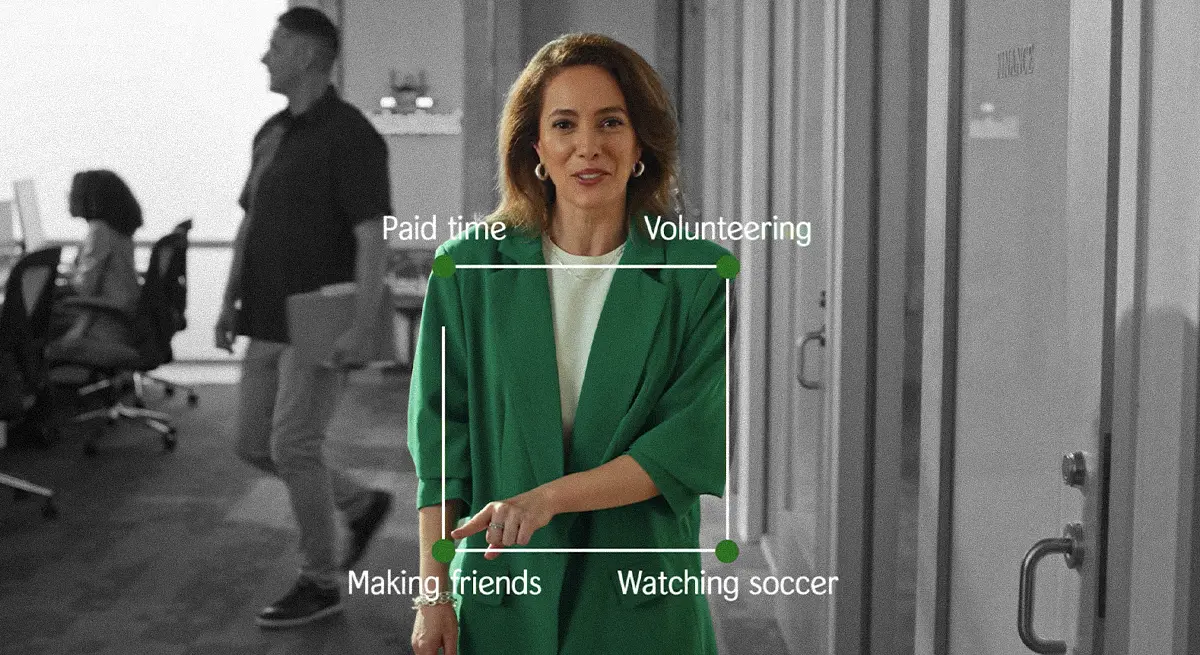
Sneaking streams. Checking scores under the desk. Toggling browser tabs between Zoom calls. American soccer fans have spent years working around the awkward truth that major international matches collide directly with the weekday grind. Heineken's response is one of the more inventive uses of video format this year: a corporate training-style video that reframes a rarely used work benefits policy as a credible-feeling permission slip, urging U.S. workers to embrace volunteer benefits so they can support local communities while watching matches together.
Pulling off a goal of that scale required a global brand to give its local team the green light to experiment with format. Guilherme de Marchi Retz, Vice President of Marketing for Heineken USA, oversees the strategy after roughly 12 years navigating the company's ecosystem. Working alongside him on the creative is Jim Curtis, Chief Creative Officer at LePub New York, whose portfolio of Cannes Titanium and D&AD Yellow Pencils helped position Heineken as the most awarded advertiser in the world in 2026. Together, the two designed the Fan Volunteers campaign to turn passive observation into physical participation, with the video itself doing the work of unlocking the program.
"The corporate training format let us talk about a real workplace benefit in a way that felt self-aware in the right way. It made the idea feel useful first, funny second, which is usually the correct order," says Curtis. The format choice was driven by a specific behavioral pattern the team had been watching for years: U.S. fans were already consuming international sports discreetly during the workday, building private workarounds around a schedule no one in the office officially acknowledged. Choosing video as the entry point let the team embed the call to action inside the content itself, with the corporate training format doubling as the credibility cue that made the workplace benefit feel legitimate rather than generic branded entertainment.
The 2 p.m. Thursday test
The video's underlying premise traces back to a glaring behavioral pattern in Heineken's research. "When more than half of desk workers tell us they've lied to watch a match, it highlights a real tension between work responsibilities and the desire to connect with the sport they love," De Marchi Retz notes. Curtis built the creative around acknowledging that pattern openly rather than dancing around it. "The creative process started with acknowledging the obvious truth of discreet workplace viewership, pushing the team to find a real mechanism that could turn that private, slightly guilty behavior into something legitimate and social," he says.
The real mechanism the team landed on extends the video into an actual program. Heineken built a dedicated portal to connect fans with local nonprofits, turning fans into volunteers through Volunteer Time Off, a common corporate perk that largely goes unused. Pairing a specific workplace barrier with an underused HR benefit creates a utility that operates beyond the typical reach-and-impressions metrics most brand films are measured against. "The objective was making the experience about more than the match itself," De Marchi Retz says. "The program allows fans to actively participate rather than simply observe."
Building a campaign around physical turnout reshapes the creative brief in measurable ways. The tongue-in-cheek corporate training video that anchored the campaign's launch drove a pilot phase that mobilized nearly 200 participants who packed 3,250 meals and cleared 3,100 square feet of green space, with the program's success tracked through a comprehensive engagement strategy across earned, owned, experiential, and partner channels. Designing for participation that way changes the question creative teams have to answer at the start of a project. "The creative has to do more than get attention, it needs to make participation feel easy and worthwhile," Curtis notes. "Instead of just asking, 'Will people remember this?' the better question is, 'Will people actually do this on Thursday at 2 p.m.?'"
Global platform, local translation
Sitting alongside Heineken's massive traditional soccer sponsorships, the U.S. team's video-led campaign extends the global Fans Have More Friends platform into a localized workday reality. The platform prioritizes human-first connections, and its architecture is built for structural flexibility, with regional teams free to translate the global idea into the specific audience behaviors they're seeing on the ground. The Fan Volunteers video is exactly that kind of translation, taking a worldwide brand premise and grounding it in a uniquely American desk-bound experience. For Curtis, the test is whether the work creates something measurable on the other side of the screen. "Fandom is a shortcut to connection, and Heineken can play a useful role in making that connection happen," he says.
The saturation of the summer sports calendar typically pushes advertisers toward familiar tactics built around sponsorship language and famous faces, with the same broadcast spots and influencer reels filling the same media slots. Heineken's video chose to operate in the white space those tactics leave behind, anchoring the creative directly to the specific, solitary behavior of the American soccer fan: "watching alone, at work, on mute, in secret." The approach reshapes success measurement around participation, with volunteer signups, meals packed, square feet cleared, and earned media as the relevant numbers. The wider lesson here is that a video can do more than entertain when its format is built to unlock behavior on the other side of the screen. "The distinct advantage of an initiative generating real-world gathering is that it tends to travel further than a traditional activation, because people actually want to join in," Curtis concludes.