inKind Read The Dining-Benefit Signals Early To Create An Advantage Others Missed
Saul Cooperstein, CRO of inKind, on how useful intelligence prepares judgment under uncertainty.

Make The Intelligence Record one of your go-to sources on Google


You have to look at a lot of different data points that, on the surface, may look like they're in conflict, and figure out what story they're actually telling you together.
Market signals don't arrive with instructions attached. A competitor makes a move, a category shifts, a data point turns negative, and none of it tells you what to do about your particular business. The executives taking the lead in today's market are the ones who can assemble scattered, sometimes contradictory evidence into a single read, interpret what it means for their own position, and act while the pattern is still forming rather than waiting for it to resolve into something obvious.
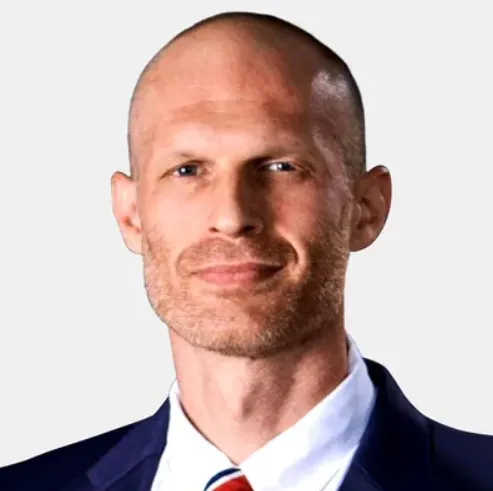
Saul Cooperstein is Chief Revenue Officer at inKind, the restaurant marketplace and dining-benefits platform that provides capital to independent restaurants and connects high-spend guests to more than 8000 venues. A UCLA-trained former Lehman Brothers analyst turned hospitality operator, Cooperstein has spent two decades across restaurant strategy, development, and finance, including senior roles at Barilla's restaurant group, Umami Restaurant Group, and sbe. That combination of capital-markets training and operator experience shapes how he reads the signals moving through the dining industry.
"You have to look at a lot of different data points that, on the surface, may look like they're in conflict, and figure out what story they're actually telling you together," he says. That interpretive work is the whole job, and a recent shift in how the biggest financial brands treat dining shows why.
A pattern hiding inside conflicting moves
On the surface, the moves looked scattered. Visa, Chase, American Express, and Capital One were all repositioning their dining offerings. Capital One acquired an exclusive stake in Resy. American Express owned and expanded Resy's competitor. OpenTable shifted its strategy. Read individually, these looked like a set of unrelated corporate maneuvers in a crowded reservations market. Cooperstein read them as a single pattern. "What you're seeing is a shift from reservation access as the valuable thing to dining benefits as the valuable thing. Access to a hard-to-get reservation was the currency for a long time. That's changing to benefits that a much broader group of diners can actually use," he explains.
The distinction matters because access and benefits imply completely different strategies. Access is scarce by definition, valuable to a narrow band of status-seeking diners, and finite. Benefits scale. A read that treats the credit-card moves as a reservations arms race leads one direction, while a read that recognizes the underlying shift toward broadly usable benefits leads somewhere else entirely.
The evidence behind the judgment
Cooperstein's read didn't come from the headlines alone, but from years of accumulated evidence that let him interpret the headlines correctly when they appeared. Part of that evidence base is relational. Direct relationships with Michelin-starred chefs and restaurant operators give inKind a ground-level view of what actually drives diner behavior, ahead of what shows up in aggregate market data. Part of it is proprietary. inKind's own platform data showed a clear pattern. "We can see it in our own numbers. Diners respond more strongly to benefits than to access. When you give someone real value they can use, it drives more behavior than the exclusivity play does," he shares.
That combination of market observation over years, direct operator relationships, and first-party evidence is what turned a set of confusing competitor moves into a legible pattern. Without it, the same headlines would have been noise. The signal was only readable because the interpretive infrastructure was already in place.
Recognizing a signal is only the start
Reading the pattern is the first move. What an operator does next is where the judgment compounds, and Cooperstein's account of the brief competition for restaurant exclusivity shows the full arc.
For a window, the repositioning by the major players created intense competition to lock up exclusive relationships with the best restaurants. Cooperstein points to Gwen and Cato, two high-end restaurants, as early beneficiaries of that competition, restaurants that could command strong terms while multiple well-capitalized suitors wanted exclusivity.
He can name the moment he believes the window closed. "When DoorDash bought SevenRooms, that was the signal to me that this particular window was closing. The dynamics that made those exclusive deals so competitive were going to change."
That read produced a specific, time-sensitive instruction to inKind's own restaurant partners: maximize your value now, before contracts renew into a less favorable environment. The intelligence converted directly into advice with a deadline attached, because a closing window rewards acting early and punishes waiting for confirmation.
Los Angeles: when weakness is the opportunity
The Los Angeles case is where Cooperstein's framework is most revealing, because the obvious read and his read pointed in opposite directions.
Government data showed Los Angeles restaurants falling behind their counterparts in San Francisco and New York. The straightforward interpretation of a weakening market is to pull back, protect capital, and wait for conditions to improve. inKind did the opposite. It remained highly aggressive in Los Angeles precisely because the weakness revealed where its support could matter most. "The data showed LA lagging. But for us, that's not automatically a retreat signal. If restaurants there are struggling, that's exactly where what we do can have the most impact. The weakness is the opportunity," he says.
Cooperstein is explicit that he doesn't fully know the causes of the LA underperformance. It could be California wage dynamics, cost pressure, post-pandemic recovery patterns, or several factors interacting. He doesn't claim certainty he lacks, and that admission is the point. Rather than handing him an invest-or-retreat answer, the data told Cooperstein where the pressure was, and his judgment about inKind's specific capability, providing capital and demand to independent restaurants, told him that pressure was where his company could do the most good. A different operator reading the identical data would correctly reach a different conclusion, because it's the operator rather than the data that carries the decision.
Intelligence doesn't replace judgement
The throughline across the credit-card shift, the exclusivity window, and the Los Angeles decision is that useful intelligence prepares an operator to exercise judgment under uncertainty. It doesn't supply an automatic answer.
This is the distinction that Cooperstein sees get lost in the enthusiasm for more data and better dashboards. Signals sharpen the questions and narrow the field. They rarely resolve the decision on their own, which is why the gap between running the same models as everyone else and winning comes down to how fast a company acts on what it sees. The operator who understands the business, the market, and the specific capability being deployed is the one who turns a pattern into a move. "The data gives you a much better starting point, but it doesn't make the decision for you. You still have to know your business well enough to know what the signal means for you specifically."
The advantage is not in merely seeing the signal. Plenty of people saw the same credit-card moves and the same Los Angeles data. The advantage is in reading it correctly, connecting it to a specific business, and acting while the pattern is still taking shape.