Reacting Fast Now Beats Forecasting When Supply Chain Disruptions Hit
Darcy MacClaren, Operating Partner at Cambridge Capital, on why replanning in hours now beats a better forecast.
Make The Intelligence Record one of your go-to sources on Google


The winners won't be the ones with the best forecast. They'll be the ones who can replan and react in hours, not weeks.

A port closes, or a supplier misses a ship date, and enterprise systems flag it within minutes. Fixing it takes days, because a person has to get on the phone and rework the production schedule and the customer commitments around the change. Agentic AI can do that rework in hours, weighing the cost and service trade-offs and pushing the decision through every system that needs it.
Darcy MacClaren is an Operating Partner at Cambridge Capital, a private equity firm that invests in supply chain and logistics companies, and she spent 13 years at SAP as its Global Chief Revenue Officer for Supply Chain, selling the software that builds those schedules in the first place. Earlier roles at Blue Yonder, Infor, G-Log, and Hewlett Packard put her close to three decades in supply chain technology, most of it spent watching companies invest in better plans.
"The winners won't be the ones with the best forecast. They'll be the ones who can replan and react in hours, not weeks," says MacClaren. Companies have spent a decade getting better at spotting problems early, and that investment paid off. What they haven't built is the layer that acts on what they see.
Where software stops
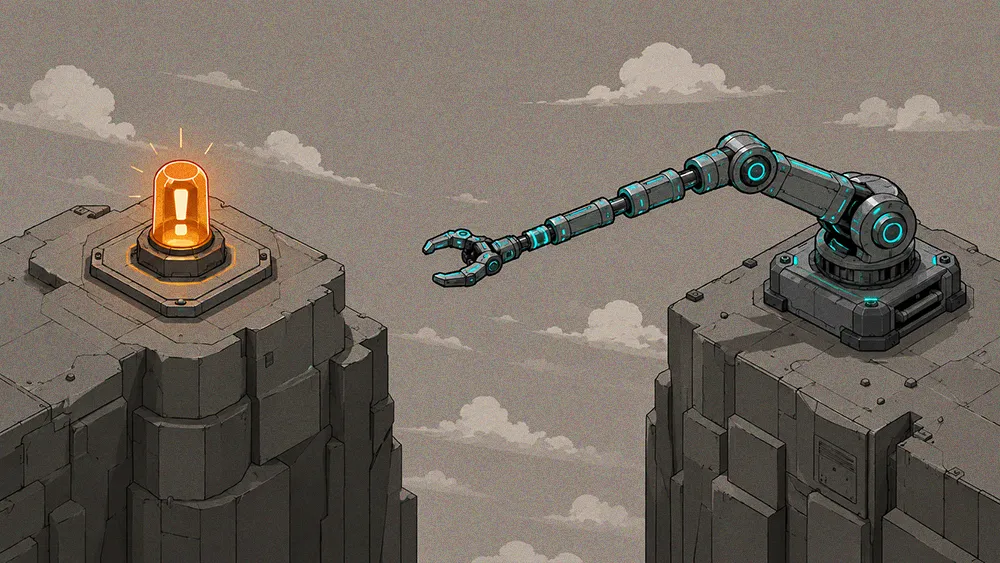
An ERP system keeps the company's official record of what it owns, owes, ships, and sells. A planning tool sits next to it and builds the schedule for the weeks ahead. "The gap is structural. ERP is a system of record and planning tools are a system of plan, and neither was ever designed to be a system of action," says MacClaren.
A supplier moves a ship date, the system logs it accurately, and that's where the software stops. Someone reads the screen, copies the numbers into a spreadsheet, and starts working the phones. The plant has to confirm before the carrier can be booked, and the carrier has to confirm before anyone can tell the customer anything useful. Each of those calls takes hours. "The failure isn't in the visibility. The failure is in the ability to go from insight to action," she adds.
An agent works that same sequence differently. It reads the current plan, checks what stock exists across every location, and prices the options against the cost and service commitments before it picks one. The decision then gets written back into the systems that have to carry it out, which is the step a planning tool has never taken. "It's not just generating a dashboard, but it's taking the recommendation, it's taking the next action with the cost trade-offs, and then it's acting on it," says MacClaren.
What an agent can't do is work from a record that only refreshes at the end of the day. It needs to know the shipment is late right now, and that stock in a second warehouse could cover the order. "Agentic AI is the final action layer, but it only works on data in motion, not data at rest. The next decade of supply chain advantage goes to whoever can get their data flowing so agents can actually act," says MacClaren.
That flow starts with one shared definition of what a customer, a part, or a shipment is across the whole company. Without it, one application reads a delay as a scheduling note while another reads it as a stockout risk. Updates then have to travel both ways, so a plan can absorb the news that a shipment slipped and revise itself. Agents sit on top of all that, which is why MacClaren tells companies to fix the foundation before buying the action layer.
Bottles in days
Retail shows the pattern most plainly. Take Heinz, for example. During the World Cup, sponsorship rules barred Heinz branding inside stadiums, so ketchup labels in the suites and at concession stands got taped over. Fans noticed and started posting photos. Kraft Heinz put a limited-edition run of pre-taped bottles into production while people were still talking about it.
Spotting the opening was the easy half. Getting bottles printed and shipped before the conversation moved on meant the marketing team and the plants were working off the same information within days. A company that runs those handoffs through email and standing meetings never gets there. "Anything in retail where you're grabbing real-time information on weather, economics, or global influences and bringing that through the rest of your organization is key," says MacClaren.
Logistics is where MacClaren sees the volume. A retail scramble like the ketchup run comes along a few times a year. Reroutes and customer change orders arrive every day, each carrying a small decision with a cost attached, and tariff and customs changes have made that stream heavier. Most companies work through them in the order they surface, so the expensive ones get the same treatment as the trivial ones. Software that can rank them by what's at stake lets a person spend the day on the few that matter.
Inventory is the same problem with more money on it. The stock a customer needs usually exists somewhere in the network, and the only question is whether it can reach the right place before the order is due. Trucks fill up and other orders land throughout the day, so the answer at nine in the morning is often wrong by two.
Where judgment sits
Pulling data together and reconciling one version against another has taken up most of a planner's week for years. Software absorbs much of that now, and hiring reflects the shift, with demand easing in planning and sourcing while data roles grow inside supply chain teams. What's left is the work no model can do on its own. "The role now is what you do when the system can't solve it, and decisions have to be made," says MacClaren.
Expediting a shipment so a customer gets what was promised costs real money, and skipping the expedite means a late delivery on an account that may or may not tolerate one. Which way that goes depends on the relationship, and most companies still want a person to sign off before anything like it executes. MacClaren expects the easier approvals to drop away as the models prove themselves.
Companies build that confidence by testing it. Teams run the system's forecast next to the one their planners adjusted, watch both for a few months, and compare. The system is usually more accurate. "If ever there's a thing where you say it got it wrong, then you look and say why. Usually it's because you knew something you didn't give the system, and then you correct that and it's right," she notes.
MacClaren gives the companies she advises the same three steps. Decide what the business is actually trying to accomplish. Find the places where moving faster turns into money. Then fix the data and connect the systems before rolling anything out.
She has been hearing a version of this for most of her career. Twenty-five years ago she joined G-Log, a transportation software startup later bought by Oracle, and its founder had a line about planning that she still repeats. "Planning without execution is where the rubber meets the air. Nothing happens. If you can plan it but can't execute it, it's meaningless," says MacClaren.