Media Sales Used To Measure Viewers. Now The Edge Is Spotting Future Buyers.
Polaris I/O's Joseph Hayes, Chief Commercial Officer, on why media's real edge moved upstream from who's watching to who's about to spend.
Make The Intelligence Record one of your go-to sources on Google


You can put the best information in the worst rep's hands. Nothing happens.

For most of media's history, an advertiser's edge lay in accessing raw viewership metrics that were tightly held. Content was mostly linear, and power was concentrated in the hands of the trackers that controlled the quantification of America's eyeballs. But that number is now a commodity. With three Nielsen alternatives certified as transactable currencies for the 2025-26 season, audience measurement stops being a private advantage. Simultaneous to that, ad creative and audience buying is being democratized by various technologies and self-serve options that shorten sales cycles while squeezing inventory. The sellers still pulling ahead are moving upstream to identify higher-tier buyers who are about to spend, and spotting that buyer across every market at once before the buyer looks like a buyer at all.
Joseph Hayes is Chief Commercial Officer of Polaris I/O, a media and account intelligence platform that enables networks to act on market signals. He spent close to 20 years inside SRDS, the roughly century-old reference business that cataloged media rates and ad data as it changed hands through Nielsen, then Kantar under WPP, then Adwanted. He dragged a 100-percent-print operation into digital while the currency it indexed slowly lost its monopoly. Nielsen still holds roughly 80 to 90 percent of the national measurement market, which is exactly why its commoditization at the edges is the more interesting story. Hayes is now selling the next currency to the same networks he once served the old one. His read on what actually moves a deal is not technological. It is human, and it is unsentimental.
"You can put the best information in the worst rep's hands," Hayes says. "Nothing happens." The signal is inert. It does not close, schedule, or persuade. It waits for someone capable to act on it, and act early.
When Signals Cross Market Lines
Hayes calls the buyers worth finding "the future spenders": the rapidly expanding, multi-market companies that have not yet raised their hand, are not yet in anyone's pipeline, and are gearing up to start spending across several markets at once. Who's watching is a measurement question, answered after the fact. Who's about to spend is a timing question, answered before the rest of the field even knows there is a question. That's the currency that has not commoditized, because it cannot be bought off a shelf. It has to be anticipated.
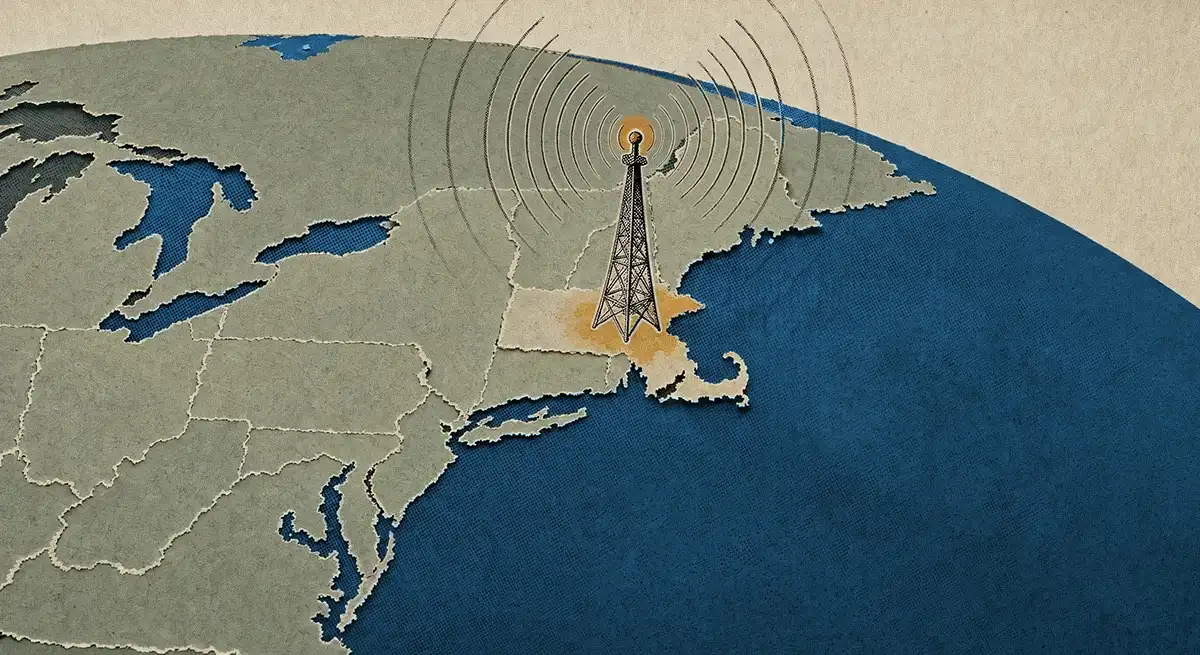
The mechanism for seeing it is cross-market. A company can be quiet in the market a seller has formally claimed and loud somewhere else entirely. "The account may sit in Massachusetts," Hayes says, "but the first real signal might come from Dallas. If you can see that in real time, you know to act before the buyer makes a move." The seller who owns the Massachusetts account would never have known to call. The signal traveled across a market line the org chart treats as a wall, and arrived before the buyer became visible the usual way.
Early Contact Isn't The Advantage
That’s where the field’s instinct to get there faster breaks down. Early contact often reflects preference more than it creates it. In one vendor's 2025 buyer-experience research, 94 percent of buying groups had ranked their options before ever engaging a seller, 95 percent of eventual winners were already on the buyer’s Day-One shortlist, and the vendor ranked first went on to win about 80 percent of the time. Being contacted first is usually a sign that the buyer was already leaning that way. The early arrival rarely causes the win.
Gartner's research on the B2B buying journey explains why the window is so unforgiving. Buyers spend only about 17 percent of their total buying time meeting suppliers at all, and as little as 5 to 6 percent of it with any single one. The seller is fighting for preference inside a sliver of attention that has mostly closed before the first real conversation. Speed gets a rep into that sliver, but it doesn't seal the deal. What wins it is showing up already useful, already trusted, already the name the buyer was leaning toward. "People do business with people they like," notes Hayes. "And the best way for people to build a relationship is to show interest in their business."
So the move that matters is not first contact. The reps who lead with a prospect's own information before they pitch anything, Hayes says, "score big points." Leading with the buyer's reality rather than your product is how a seller converts an early signal into early preference. The data buys the at-bat. The human turns it into the kind of preference the rest of the field never gets a swing at. This is why Hayes will not let the story collapse into automation. "It's the human element, and that's never going away." The signal can be industrialized. The act of being preferred cannot.
Local TV’s Next Edge Sits Upstream
At scale, the edge sits with teams that can spot the future spender before the market does. The advantage is reaching them while trust is still up for grabs. The old edge of who is watching has been certified into a commodity and split three ways. The new edge of identifying who is about to spend sits with whoever can see the buyer take shape and put a capable human in front of them before they begin leaning one way or another.
This is also where the field's economics are pointing the urgency: core local-TV ad revenue is sliding from roughly $14.3 billion in 2025 toward about $13.9 billion in 2026, with a political year inflating the headline by about 24 percent and masking the underlying drift. In a shrinking core, finding the next spender first becomes the growth engine.
Polaris I/O is wiring certified audience data into its MarketView product through a partnership with Comscore announced in November 2025, folding the commoditized currency in as plumbing so the platform can spend its attention on the upstream signal that is not yet commodity. "Polaris I/O creates opportunities," Hayes says. "Salesforce tracks them." The tooling finds the future spender and surfaces the moment. It does not close the deal, and it was never going to. The best information in the wrong rep’s hands still does nothing. The advantage belongs to whoever puts it in the right hands soon enough to matter.