When Every Company Runs the Same Frontier Models, the Gap Is How Fast They Act
Polaris I/O’s Dave Irwin explains why the enterprise-AI productivity gap is a problem of decision speed, not technology, and that the unlock is collapsing the time from signal to action.
Make The Intelligence Record one of your go-to sources on Google


The AI works fine. It’s the people around it who are stuck asking, 'what do I do now?'

Frontier AI models now sit at rough feature parity. Every company can buy substantially similar capabilities from the same few providers, and the distance between the best model and the next one keeps shrinking. And yet, most companies still don't have much to show for it, and criticism naturally turns to the aptitude of users.
Speaking to Channel NewsAsia recently, NVIDIA's Jensen Huang pushed back on the idea that AI is the reason companies are shedding staff, saying CEOs who blame layoffs on AI are "scaring people, and that's irresponsible" and calling the whole explanation "lazy." So when promised returns fail to show up while the human scapegoat explanation falls flat, the next instinct is to blame the technology for being too uncontrollable, too expensive, or too early to adopt. But the variable that matters most in business is how fast a company can move from signal to action within the parameters or any given technological climate. It's a very human-centric as well as tech-centric equation that executives face daily.
Dave Irwin is the Founder and CEO of Polaris I/O, an enterprise account intelligence platform, and author of Go To Customer. He has spent years watching commercial teams try to turn external market signals into action, and he has seen this misdiagnosis play out from the inside. Once the model is no longer what separates one company from another, the difference that's left is the organizational framework a team builds around it, whether its people can restructure how they decide fast enough to match what the machine now makes possible. "The AI works fine," he says. "It’s the people around it who are stuck asking, 'what do I do now?'"
The Tempo Problem
What makes the gap so expensive now is the change in tempo. Irwin puts it in baseball terms: in the little leagues, pitches cross the plate at fifty miles an hour. In the majors, they come in at a hundred, and the only way through is to get faster at reading them. Ordinary business, measured against that kind of acceleration, "looks like it is running underwater, slow as molasses," he says. A team used to making five real decisions a week can suddenly be handed the inputs for a hundred and fifty, and the bottleneck stops being the analysis and becomes the person in front of it, deciding what to do.
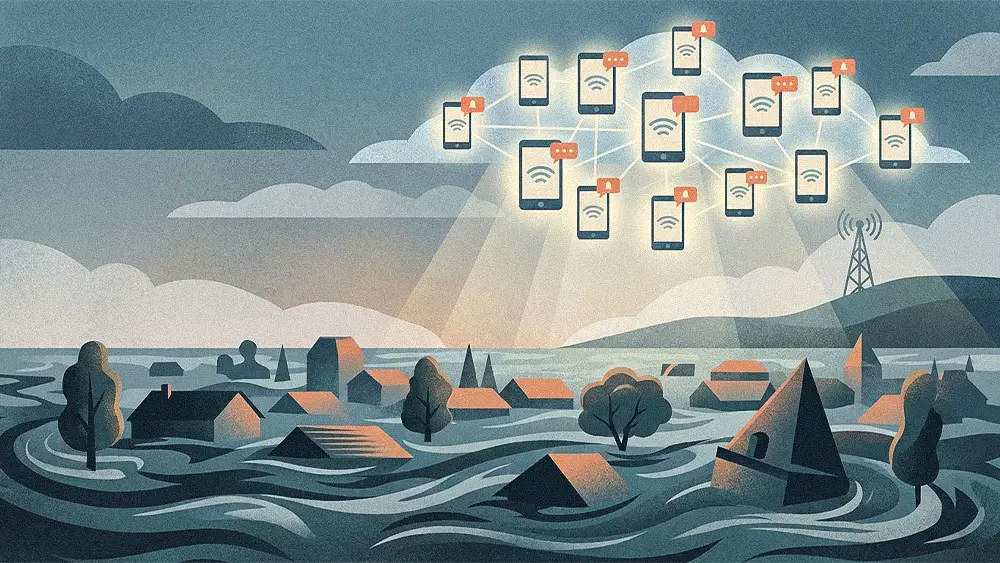
That's where most AI projects die. A signal fires somewhere, a trigger event at a customer or a supplier, and it hits what Irwin calls a brick wall, "because there's no integrated workflow." The insight never reaches the person who could act on it, and the action never loops back to the thing that set it off. In most companies no one is measured on how fast a credible signal becomes a coordinated action, so the gap only widens. Some companies skip the workflow question entirely and jump straight to cutting headcount. "Workforce reductions may create budget room, but they do not create return," Gartner's Helen Poitevin said.
From Signal To Decision
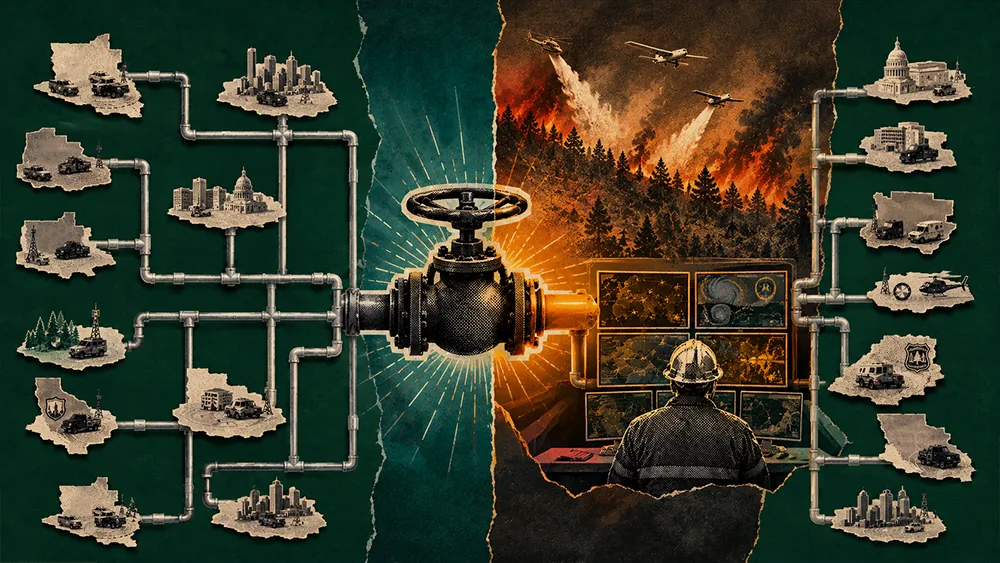
Irwin's name for the fix is decision intelligence at the speed of AI. In practice, that means: collapse the time from signal to decision from weeks and months to minutes and hours, and a team can do, by his estimate, a hundred times the work. The unlock is not a smarter model but a connected chain, from the event that matters to the decision it should trigger to the action that follows, with someone owning how fast that chain moves. "Surfacing insights isn't good enough," he says. "Tell me what decisions to make."
Where The Value Moves Next
This is also why Irwin is unbothered by the fear that the model makers will absorb everything above them. As the models commoditize, he argues, "the monetization of the value of AI occurs at the next layer up," where data, workflow, and judgment meet. The market, in his view, is still mispricing where that value sits. He is not alone in the read. Vista Equity's Robert Smith has argued that software is not dying so much as relocating, with the durable value moving to the workflow layer on top of the models. Microsoft's Satya Nadella has gone further. On the BG2 podcast, he said business applications are "essentially CRUD databases with a bunch of business logic" and that "that's probably where they'll all collapse, in the agent era." The defensible position is no longer the model but the layer that decides what to do with it.
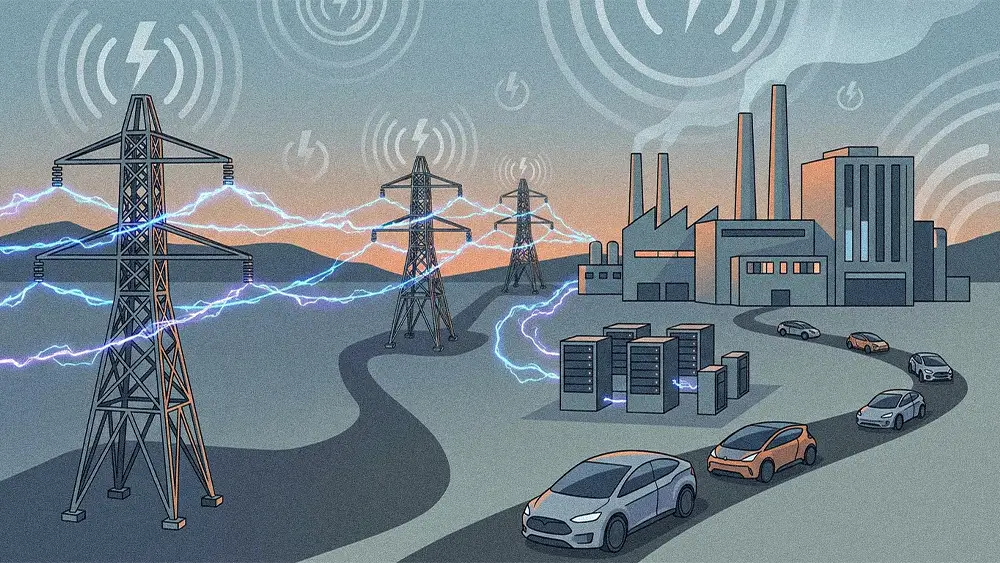
There is one more blind spot Irwin keeps returning to, and it is the one his own company is built to close. Most organizations instrument themselves obsessively and watch almost nothing outside their own walls. They track internal metrics in fine detail, but the forces that will actually move them tend to arrive unannounced: a competitor’s hire, a supplier’s stumble, a regulatory shift, a customer expanding into a new market. Imagine living somewhere that tornadoes and earthquakes and hurricanes hit every ten minutes, he says, with no idea what's coming. Polaris reads those external signals early and turns them into decisions, which makes the company a working bet on the argument he's making.
None of this, Irwin says, waits on permission or a budget most companies do not have. The capability is already on every desk, and every company is already choosing how to use it, consciously or not. Waiting to feel ready is its own kind of answer. "It's a human choice you're making," Irwin says, "which side of the value you want to be on."