Pharma Marketing's Next Performance Frontier Lives Inside The Timing Of The Message
Tracey Brader, Chief Strategy and Innovation Officer at Remedy Edge UK, explains the timing discipline pharma marketing has to build around the moments a prescriber's circumstances change.
Make The Intelligence Record one of your go-to sources on Google


We spend a lot of time getting the messages right. But we need to optimize which message lands when, and optimize that for each individual and how they are approaching their practice and patients.

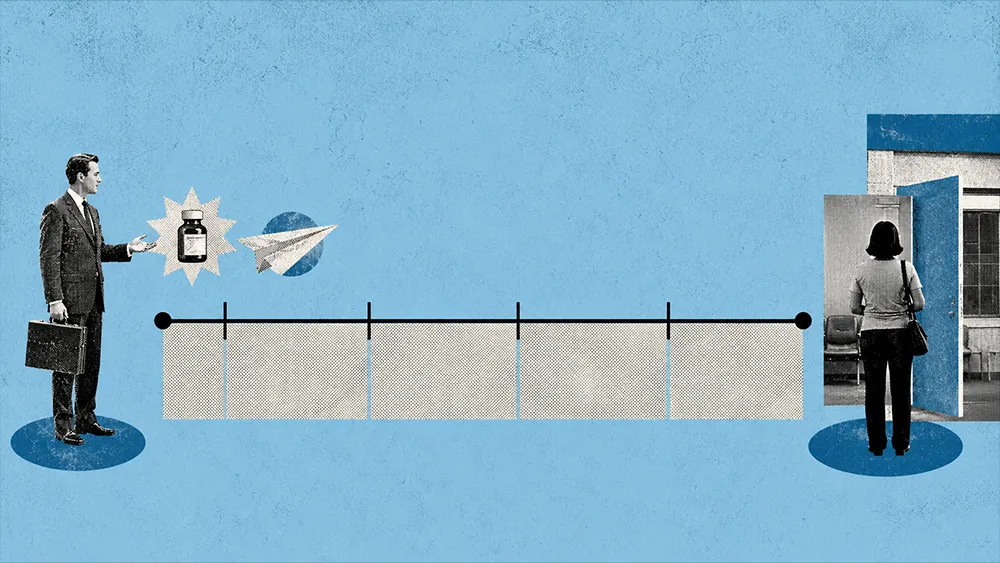
A pharmaceutical sales representative presents a product to a doctor who has no patient currently matching the indication. Three weeks later, the right patient walks into the office, and the message the rep delivered has already faded. This scenario has become one of the most consistent forms of wasted commercial effort in pharmaceutical marketing, and it points at a specific frontier where the industry's remaining performance gains are hiding. The material improvements now come from the discipline of reaching prescribers at the moment their circumstances make them ready to act, meaning message timing is starting to overtake message design as the operational lever pharma teams are optimizing against.
Tracey Brader is the Chief Strategy and Innovation Officer at Remedy Edge UK, where she leads strategy for a healthcare agency serving global pharmaceutical clients. She has spent over three decades inside the healthcare marketing side of the industry, and served as this year's Cannes Lions Pharma Jury President. Her argument is that the pharma industry has spent years perfecting message and creative while leaving one of the largest performance variables underworked: the specific moments in a prescriber's practice that determine whether the message is actionable at all.
"We spend a lot of time getting the messages right. But we need to optimize which message lands when, and optimize that for each individual and how they are approaching their practice and patients," says Brader.
Catching prescribers mid-decision
Brader argues that pharma marketing has to key its outreach to the specific moments a doctor's circumstances change. A senior consultant can give a mid-career clinician more prescribing independence, and a revised national guideline can suddenly make certain treatments defensible inside a review board. A doctor returning from a medical congress is also thinking about the category differently than a colleague who spent the week covering patient lists back at the practice. "Having the right message at the right moment is critical," says Brader. "It is the timing and the synchronicity of delivering the messages that will affect most behavior change."
The harder problem: many of these moments happen outside a manufacturer's operating hours. A physician managing an unexpected complication at seven in the evening often has no live medical support line to consult, and the field team that could answer the question has clocked out for the day. Brader's practical response is to combine AI-enabled modular content with round-the-clock medical support, using what she calls "imaginative repetition" to keep the same core message present in new formats until a real patient makes it relevant.
From pill to persistence
In Brader's view, building a truly holistic patient experience means surrounding the core product with a robust support network. "Pharma is taking a step forward, when we think more holistically about what it is they provide," she adds. "It makes me think about Virgin Airlines years ago when they were looking at what is it they sell. If you can enrich an experience, before or after you fly, in lounge or on the aircraft, that makes you feel different. The same is true when it comes to a prescription. It is not the pill, infusion, or injection, it is all that surrounds the medication itself."
The timing discipline extends to how a drug itself is positioned in the patient's ongoing life. Treatments that work well under monitored trial settings often lose ground once the patient is managing the regimen alone. Brader points to the GLP-1 category as the sharpest recent example of manufacturers responding to that gap, where brands are now layering human-centered AI and wearable devices onto the medication itself. Lilly's use of the Oura Ring to monitor treatment response is a concrete case: the ring gives the manufacturer visibility into how patient behavior around the drug is changing, and gives the patient a support scaffold outside the prescriber's office. "It doesn't just focus on what the pill does but the impact on patient’s lifestyle beyond the scales: more exercise, better sleep, less stress," Brader explains.
Delivering that kind of layered support requires assembling the right people inside the campaign team before the work begins. Brader argues that the strongest inspiration comes from teams that combine real patients, medical scientists, and marketers in the same working sessions, so the questions being asked about the campaign draw from more than one professional worldview. "There is a benefit to bringing in real patients who can go, this is the problem when you look at the world through another's lens," she notes. "I've worked with scientists who are really good at coming up with marketing propositions or coming up with ideas of how to unpick or unlock diagnostic challenges."
The final piece is coordinating what pharma organizations already have. Brader argues that most marketing improvement isn’t as simple as budget increases when the real gains are available inside better coordination of the resources already in play. Medical congresses, KOL programs, omnichannel content, and field team activity produce more value together when the teams behind them share a plan and adjust it in real time. "We're always looking at reducing the expense and the budgets around marketing, but you can apply kind of a multiplier effect," she says. "If you compound the creativity, if you compound what you're doing between everyone, it gives you an impact that is far greater than the budget."
Beyond the plateau
The last piece of Brader's argument moves the frame from the manufacturer's perspective to the patient's. Timing and coordination discipline get pharma marketing to the moment a prescriber is ready to consider the treatment, but the manufacturer's influence typically ends at the prescription itself. The logistical realities that determine whether the patient can get, take, and stay on the medication frequently sit outside the marketer's traditional line of sight, and Brader believes that pharma's next-frontier work lives inside that gap. "Prescribing a product is one thing, but the patient also needs to understand why they would want to take it in the first place and keep taking it," she says.
Beyond the specifics of timing and patient understanding, Brader says that the industry's operating culture has to stay open to change. She sees pharma organizations often defaulting to what has worked historically and treating current practice as settled, when the current practice is what got them to a plateau. "A good business person hangs on to the best just until something better comes along. I wonder how often we're looking for that better rather than just hanging on to what stood us in good stead in the past," she concludes. "I think companies should be really open-minded to the innovation that is out there and how they can use that for competitive advantage."