The Threats That Break the Energy Grid Are Visible in Advance. Catching the Strain Upstream Is How Operators Get Ahead of It.
Almost everything needed to prevent the next blackout already exists: the forecasts, the regional risk maps, the upstream signals. What's missing is the step between seeing it and acting on it.
Make The Intelligence Record one of your go-to sources on Google


You're not forecasting demand. What you're forecasting is the exception. So instead of a two-and-a-half-hour outage, you get a fifteen-minute one, and you're not caught flat-footed. You saw it coming.

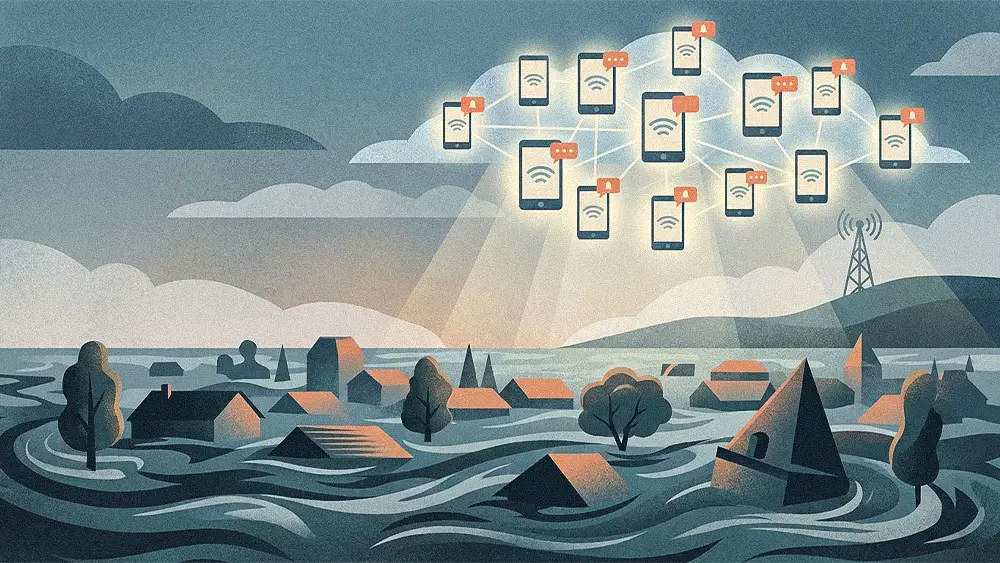
When record heat hit Utah's Wasatch Front, the power grid buckled. Transformers and fuses failed across the region, and an estimated 13,000 customers lost electricity. But it wasn't some freak event. It was just ordinary summer heat meeting equipment that couldn't keep up with it.
Ankur Laroia watched it from the southwest corner of the same state, where his own county had come close to the same thing just weeks before. A region that tripled in population in a decade, on a grid built for just a fraction of it, had spent an afternoon deciding whether to impose rolling blackouts as the temperature climbed toward 110 degrees. Laroia reads these events with a particular background: earlier in his career he ran planning and technology for a multibillion-dollar energy company, and today he holds a Top Secret/SCI clearance, serves as a presidential appointee to the White House Office of Science and Technology Policy, and advises Polaris I/O on public sector work.
"You don't control the weather," he says. "The only thing you control is how fast you're growing, and then how you manage the demand once you have grown." The blackouts ultimately didn't come, at least not that afternoon. But the near-miss is a preview of something the whole country is walking into, and it can be seen coming from a mile away.
Climbing demand
For nearly two decades, US electricity demand barely moved. It was essentially flat from the mid-2000s into the early 2020s, and the grid was planned around the assumption that the trend would hold. That assumption is gone. The Energy Information Administration projects the strongest stretch of demand growth in a generation, and it's explicit that this isn't a post-pandemic bounce. It's structural.
Utah isn't the outlier, and heat isn't the only thing straining the system. In Texas, the largest grid in the country, the pressure runs the opposite direction: not weather wearing down old equipment, but an economy growing faster than the grid can follow. ERCOT, the state's grid operator, projects peak demand could nearly double by 2030, and its queue of large new power users has grown by more than 200 gigawatts since 2024.
The single biggest driver of that growth, in Texas and nationally, is the data center boom, but it isn't the only one. Electrification is adding steady load as homes swap gas furnaces for heat pumps and drivers move to EVs. Industrial demand is climbing toward records that have stood for a generation. The sources aren't really the point. The point is that the curve bent upward, all at once, against infrastructure and planning cycles built for a flat line.
Danger, documented
Unlike most crises, the grid's danger is already written down. The North American Electric Reliability Corporation, the body responsible for keeping the grid stable, reported that 13 of 23 regions across North America face elevated or high risk of electricity shortfalls in the coming years. Peak demand is projected to grow faster than at any point since the organization began tracking it three decades ago. By its most recent summer assessment, aggregated peak demand had already climbed more than 11 gigawatts above the projection made just a year earlier.
This isn't a surprise anyone will be able to claim after the fact. It's a published forecast, region by region, with the years the risk arrives. And NERC's own recommendation lands on a fix that's both obvious in principle and difficult in practice: coordinated planning across the electricity and natural gas systems. There's no shortage of warning. There is, however, a shortage of action on the warning.
What happens when the warning is ignored
We've already seen what happens when the warning goes unheeded. It comes with an enormous cost.
Five years ago, Winter Storm Uri drove Texas demand up and generation down at the same time. The grid operator ordered the largest manually controlled blackout in US history, roughly 20,000 megawatts shed, and still came within minutes of a collapse that could have taken weeks to recover from. More than 4.5 million customers lost power, some for four days in freezing temperatures. The federal review counted more than 200 lives lost.
The crucial part of the story is that absolutely none of it was unforeseen. Texas had been told, explicitly. After a 2011 freeze caused similar blackouts, regulators recommended winterizing the grid, and those recommendations, in the words of the later review, largely fell on deaf ears. Cold-weather standards had been circulating since outages years before that. The warnings existed, but the spending to act on them did not.
And it wasn't only a cold-weather problem. Months after the freeze, the same grid operator was asking Texans to conserve power during near-record heat, with thousands of megawatts of generation forced offline. Same grid, opposite season, same underlying gap. The weather is the catalyst, but it's not the failure. The issue is the absence of preparation for conditions that are entirely predictable, whether the threat is heat or cold.
Everyone runs their own grid
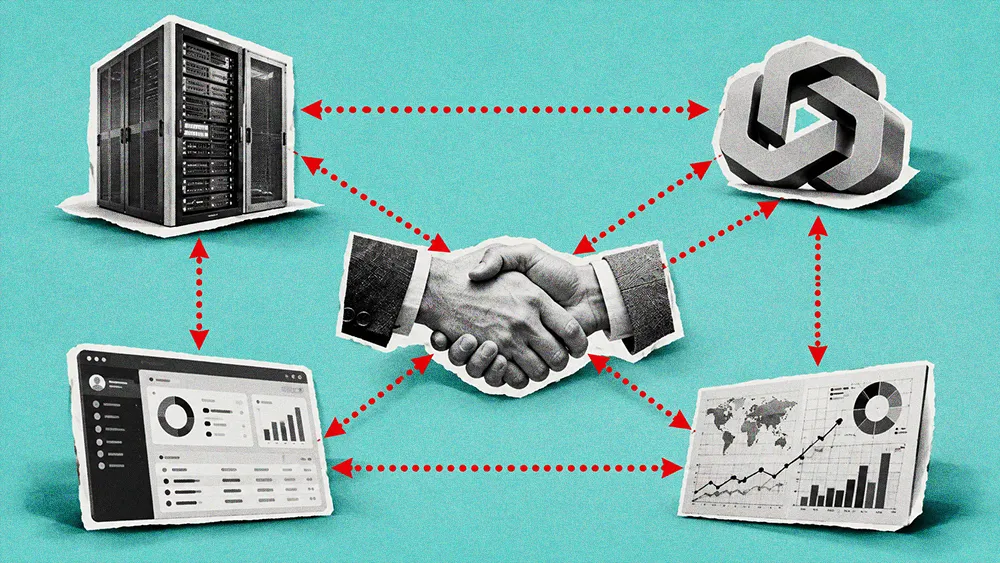
So why isn't the predictable acted on? Part of the answer is the same fragmentation that dogs any emergency involving more than one operator. The systems that run a grid are built by different companies, and they don't speak the same language. "You buy the solution from Siemens, and it only works with Siemens equipment," Laroia says. "It doesn't work with Honeywell. It doesn't work with Rockwell. You've got an interoperability problem baked in from the start."
The coordination between grids, when load has to be balanced across neighboring systems, is often no more sophisticated than the conference call that decided the fate of Laroia's county. Operators get on the phone and agree, by voice, how much power to move where. "You've got operators on a call, saying 'I know the demand over here is X,' 'I know the load's going to be Y,' 'here's what I can push to you.' It all works until somebody gets a number wrong. Somebody mishears one figure, and you're in real trouble, fast."
The data to do this properly exists, it's just locked inside systems that don't talk to each other. This is work for a platform that fuses every operator's feed into one live picture. Instead, right now, it's a phone call.
Seeing it upstream
Picture that same heat wave, except the alert doesn't wait for the transformer to fail. It shows up earlier, upstream, in the grid that generates and ships the power in the first place. For Laroia's corner of Utah, that's California, where a building heat wave bends the grid toward its own peak days before the strain ever reaches him. That upstream stress is visible, which means the demand curve is forecastable. The only question is whether anyone sees it in time, and today, mostly, they don't.
This is Polaris's core approach. Rather than pulling every utility's data into one warehouse, Polaris taps into the systems where the data already lives, fuses it in real time, and hands the operator a picture of what's forming and what to do about it: taper demand now, bring standby generation up early, tell customers to shave the peak before it arrives instead of explaining the blackout after it hits. "You're not forecasting demand. What you're forecasting is the exception. So instead of a two-and-a-half-hour outage, you get a fifteen-minute one, and you're not caught flat-footed. You saw it coming."
The difference, again, is time. Standby generation isn't instant. Laroia points out it can take two to three hours to bring a plant up from cold. "People think you push a button and a turbine comes on. It's not that simple." Which is exactly why seeing the peak coming, hours or days ahead instead of at the moment it breaks, is the whole game.
Knowing isn't the same as moving
When a grid fails, the cost lands on the people furthest from the decision. The hospital on backup power. The person running a medical device at home. The town at 110 degrees with nowhere cool to go. They never see the conference call or the transformer or the forecast that everyone upstream was looking at, they just lose power.
The grid is the rare crisis that announces itself years ahead. Everything that breaks it—the demand, the shortfall, the strain building upstream—is forecast, measured, and on the record before it happens. By the time the lights go out, nothing about it should qualify as a surprise.
The money follows the same logic. Enormous sums appear once the lights are out, emergency generation, mutual-aid crews, federal disaster dollars, spent at a premium and without argument. A fraction of that, spent early on the systems that would see the strain coming, is the harder sell every time. The dollar spent before the peak does more than the dollar spent during the collapse, and everyone who runs a grid already knows it.
But clearly, knowing has never been the hard part. What's missing is the step from forecast to action, taken while it still matters.